
Marketing Report- C10DM
Persona Development
Personas are fictional characters that represent segments of a target audience, helping marketers understand consumer behaviors, needs, and motivations. They are predictive tools that capture past behaviors, current situations, and future aspirations, mediating between the brand and potential customers (Aimé et al., 2022). By synthesizing data from multiple individuals, personas offer a realistic representation of the target audience, facilitating tailored marketing strategies (Hsu et al., 2024). Additionally, personas help create a long-lasting emotional bond with consumers as they provide relatable points of reference (Herskovitz and Crystal, 2010).
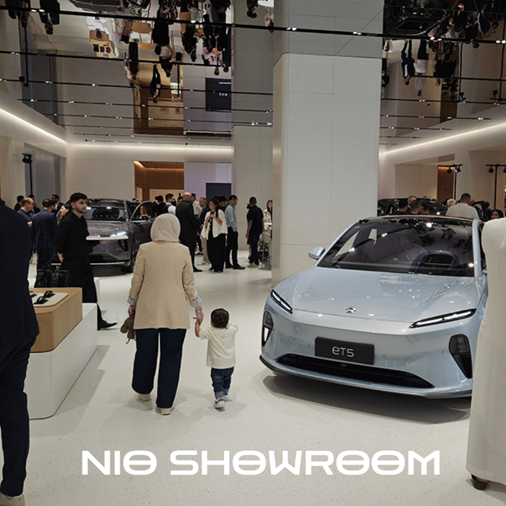
For NIO House Abu Dhabi, a premium EV showroom and lifestyle space, understanding the target audience is essential. The objective is to attract affluent, tech-savvy individuals who value sustainability, luxury, and innovation. Developing a detailed persona helps in crafting personalized content, selecting the most relevant communication channels, and addressing potential barriers to EV adoption (Jansen et al., 2020).
| NAME: Sophia Adams Quote: I want more than just a car — I want to be part of something innovative and inspiring. KEYWORDS: Luxury, Sustainability, Innovation, Community, Technology, Experiences | PSYCHOLOGICAL INFORMATION Motivations: Environmental consciousness, interest in smart technology, desire for social status and connections Benefits Sought: Convenience, exclusivity, personalized brand experiences, and community Influences of Others: Tech-savvy friends, social media influencers, luxury lifestyle bloggers Lifestyle: Urban, active on social media, attends high-end events and networking gatherings | TECHNOLOGY BEHAVIOUR Key Device (s): S24 Ultra mobile phone, Macbook Hours online/social media: 4–5 hours/day Platforms used most intensively: Instagram, LinkedIn, YouTube |
| DEMOGRAPHIC INFORMATION Age: 32 years old Gender: Female Education: Master’s in business administration Location: Abu Dhabi Occupation/Salary: Marketing Director, AED 40,000/month Household: Single Income/Socio-Economic Class: High-income, Upper-middle class | CONSUMPTION BEHAVIOUR Drives daily for commuting and leisure, participates in various sustainability events and has attended EV- related events before. | KEY GOALS/FRUSTRATIONS Purchase Goals/Frustrations: Own a premium EV that aligns with sustainability goals and a luxury lifestyle. Charging station availability, brand trust for new entrants like NIO, range anxiety, and lack of personalization in car buying experiences. Technology Goals/ Frustrations: Wants seamless tech integration Frustrated by slow advancements in smart car features and dislikes complicated, non-intuitive interfaces. |
Sophia’s demographic details reflect the typical affluent consumer in Abu Dhabi, where luxury and technology are key drivers of lifestyle choices. The UAE’s luxury EV market is projected to grow to $54 billion by 2035 (Thomas, 2025), and research shows consumers are willing to pay a premium for sustainable products (Shales, 2024). Abu Dhabi’s high-income population, especially professionals working in leadership roles, aligns well with NIO’s luxury tech positioning.
Sophia’s motivation for sustainability and innovation mirrors global EV adoption drivers. Studies have found that luxury EV buyers are often motivated by a combination of environmental values and technological curiosity (Pamidimukkala et al., 2024; Uddin, 2024). NIO’s battery-swapping technology and commitment to a greener future align with these values, making the brand an appealing choice for consumers seeking both status and substance (Nio, 2025).
Sophia’s desire for community and social experiences is also relevant. Experiential luxury is a rising trend, where consumers seek more than just products — they want meaningful interactions with brands (Maital, 1999). EV consumers are not just purchasing products buying into a lifestyle (Gruber, 2021; Axsen, 2018). NIO House’s design as a social hub can act as a physical touchpoint, aligning perfectly with hedonism (von Wallpach et al., 2020) and offering a space for networking, events, and immersive brand experiences. Experiential marketing has been shown to boost brand loyalty and strengthen emotional connections with consumers (Xu et al., 2022; Shahid, 2022).
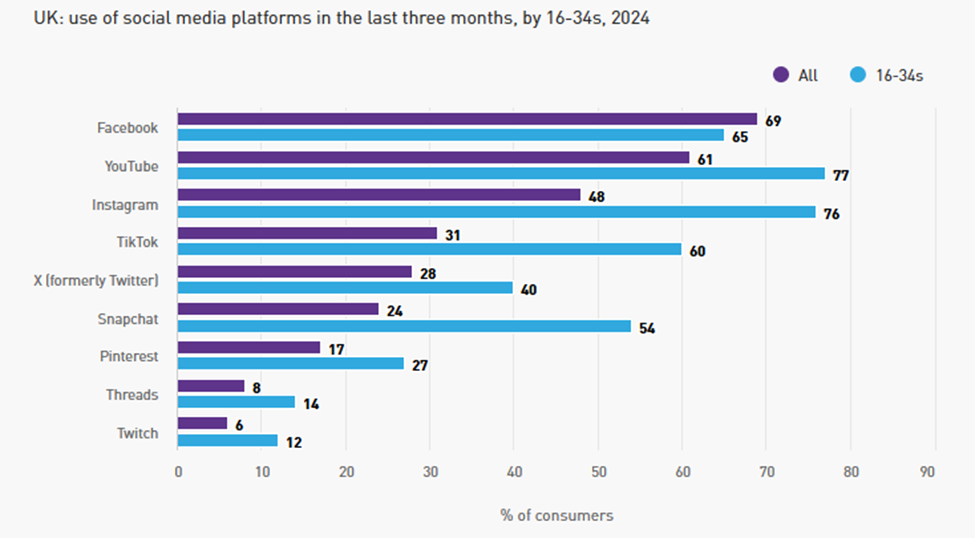
Fig. 1: Shergill (2025)
Sophia’s online behavior reflects the increasing reliance on social media for brand discovery and engagement. According to Mintel data, 70% of consumers use Instagram, and over 50% have used it in the last 3 months (Shergill, 2025). While this data is based on the UK market, it remains relevant to the UAE, as social media penetration is even higher in the region — with Instagram being the most popular platform after WhatsApp (GMI, 2024). This can be framed as an indicative trend that likely translates to the UAE’s luxury market, especially among expats and high-income consumers. This supports the decision to use Instagram as the primary campaign platform, reinforcing that it’s a highly active, visually driven space, making it an ideal platform to showcase NIO House’s aesthetics (Suryani et al., 2022).
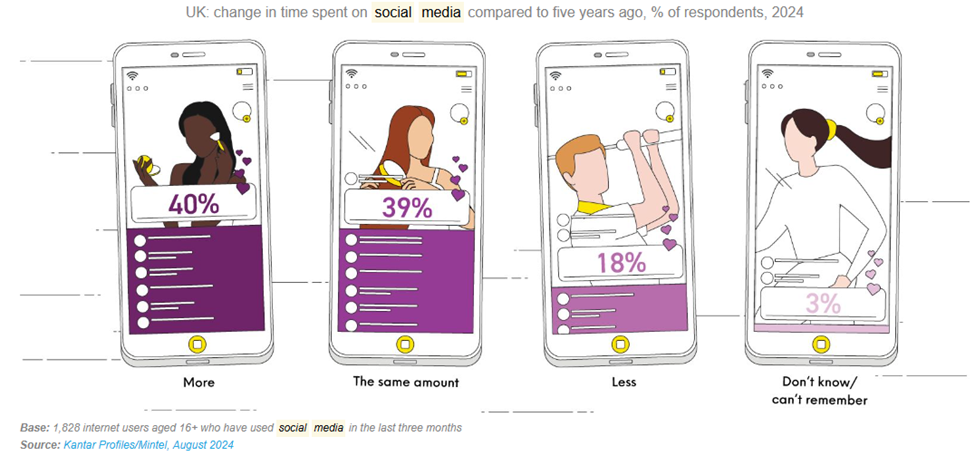
Fig. 2: McGrath (2024)
Additionally, time spent on social media has increased (McGrath, 2024), which validates Sophia’s 4–5 hours/day online habit. This aligns with Mark Shahroozi’s statement that social media is NIO’s most important channel to attract visitors to NIO House Abu Dhabi (Oniga, 2025).
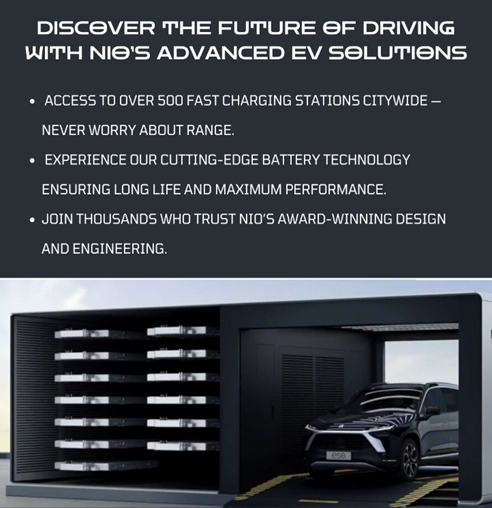
Sophia’s tech frustrations are typical of EV consumers. Studies show that barriers like range anxiety, charging infrastructure, and complicated tech interfaces can delay adoption (Tarei et al., 2021; Krishna, 2021; Adhikari et al., 2020). However, NIO offers solutions to these barriers, such as their battery-swapping technology, which reduces wait times and eliminates range concerns (Nio, 2025).
Sophia’s desire for seamless tech integration also reflects consumer expectations for intuitive, connected features. In luxury markets, buyers expect high levels of personalization and easy-to-use interfaces (Dhillon et al., 2020). NIO can position itself as a tech leader by highlighting smart features and continuous updates that enhance the user experience. While personas are useful for understanding target audiences, they have limitations. Personas may lack validity if based on incomplete or outdated data, leading to inaccurate assumptions about consumer behavior. Creating detailed personas can also be time and resource-intensive, making them less practical for smaller brands (Salminen et al., 2018). Additionally, Mikhlina and Saukkonen (2024) highlight that personas can raise ethical and privacy concerns, especially if personal data is misused. Lastly, personas may struggle to keep up with rapidly changing consumer preferences, especially in tech-driven markets like EVs, where innovation constantly reshapes expectations (Salminen et al., 2018).
Message Focus
The campaign’s core message should position NIO House Abu Dhabi as more than just a showroom — it should be portrayed as a luxury community space that blends innovation, sustainability, and meaningful experiences. Salminen et al. (2018) argue that aligning the message with a persona’s motivations increases engagement and conversion potential, making this message strategy more likely to resonate with Sophia and drive her to physically visit the NIO House.
For Sophia, the message should emphasize three key elements: experiential luxury, tech-driven innovation, and sustainability & impact. NIO House’s event spaces, test-drive opportunities, and interactive tech displays cater to her desire for exclusive brand interactions and status-driven experiences. Meanwhile, the emphasis on sustainability appeals to her eco-conscious values, reinforcing the idea that her purchasing decisions can contribute to a greener future.
There are three main types of message appeals: rational, emotional, and moral (Kusumasondjaja, 2018). Rational appeals focus on logical reasoning, product features, and consumer benefits. Emotional aims to evoke positive or negative emotions to build a connection with the audience. Moral appeals work on the audience’s sense of what is right or wrong.
Emotional appeals are highly effective for luxury brands because they tap into consumers’ desires for status, exclusivity, and belonging (Amatulli et al., 2020). By framing NIO House as a luxury hub where visitors can connect with like-minded individuals, attend VIP events, and experience luxury first-hand, the campaign can create an emotional draw for Sophia, who seeks community and social connections. Research suggests that emotional appeals work best for hedonic products, while rational appeals are better for utilitarian products (Andreu et al., 2015). Since luxury EVs are both status symbols and tech-driven products, a hybrid approach that combines emotional and rational appeals is the most effective strategy.
While emotional appeals drive initial attraction, a rational appeal reinforces the decision. NIO’s unique innovations, like battery-swapping technology and AI-powered driving assistance, which reduce range anxiety and enhance convenience should be highlighted (Panda and Mishra, 2013; Wu and Wang, 2011). This combination aligns perfectly with Sophia’s dual desires for luxury and functionality — she wants an exclusive brand experience but also needs practical features that make the ownership experience seamless and futuristic.
NIO House could address common EV adoption barriers by offering live tech demos, charging solution workshops, or expert Q&A sessions. These experiences would give potential buyers, like Sophia, the hands-on reassurance they need to trust the brand. Research shows that in-person brand interactions can reduce consumer uncertainty and increase purchase confidence (Grewal et al., 2009), making this an effective way to convert curiosity into showroom visits.
Creating a sense of urgency and exclusivity can further increase footfall. Leveraging FOMO (Fear of Missing Out) through Instagram promotions can make NIO House feel like a must-visit destination. Bui et al. (2022) found that VIP event promotions and exclusive brand experiences can motivate consumers to visit physical locations. For example, the campaign could promote exclusive test-drive events, invite-only workshops, or limited-time product showcases, encouraging Sophia to physically visit the space to avoid missing out. Good and Hyman (2020) revealed that FOMO increases purchase likelihood, while research has found that multisensory brand experiences lead to higher satisfaction and equity (Kaushik and Gokhale, 2022; Castillo-Villar and Villasante-Arellano, 2020; Wiedman et al., 2018; Hultén, 2011). Moreover, clear, direct ‘Call to Actions’ like “Book Your VIP Test Drive” or “RSVP for Our Sustainability Brunch” clarify action steps, reducing decision fatigue and boosting campaign performance (Vafainia et al., 2019).
The campaign should incorporate an intimate appeal to resonate personally with the audience. Reich and Pittman (2020) note that such appeals boost engagement when aligned with suitable platforms. For Sophia, integrating behind-the-scenes content, testimonials, and personal stories from NIO owners could foster a deeper community connection, compelling her to visit NIO House by emphasizing what she’s missing.
The tone of voice should balance sophistication with warmth to mirror NIO’s luxury yet inviting image. According to Phan et al. (2011), luxury brands should blend exclusivity with accessibility to appeal to affluent consumers. On Instagram, this is achieved through high-quality images, aspirational captions, and interactive elements like polls and Q&A stickers, as Hirose and Christison (2024) recommend. Such features showcase NIO House’s luxurious interiors and lifestyle, ideally suited for Instagram’s visual platform, making it compelling for Sophia to engage and share.
Application of Social Impact Theory
Social Impact Theory, introduced by Bibb Latané in 1981, examines how individuals are influenced by the presence and actions of others. The theory posits that social influence is a function of three key factors (Latane, 1981; Perez-Vega et al., 2016):
- Strength: The importance or power of the influencing source, which can be categorized into:
- Situational Strength: The influence exerted by the source in a specific context or situation.
- Trans-situational Strength: The consistent influence a source maintains across various situations.
- Immediacy: The closeness or proximity of the influencing source to the target individual, encompassing:
- Physical Immediacy: The actual physical distance between individuals.
- Temporal Immediacy: The time elapsed between the influence attempt and its effect.
- Social Immediacy: The degree of social closeness or relationship between the source and the target.
- Number: The number of sources exerting the influence; generally, as the number increases, the social impact on the target also increases.
However, it has its limitations. Firstly, SIT focuses heavily on measurable aspects like strength, immediacy, and number, potentially overlooking qualitative factors such as individual differences and contextual nuances. Secondly, oversimplifies complex social interactions by focusing primarily on these three factors, potentially neglecting other variables like individual differences and contextual nuances. Lastly, it fails to adequately address group dynamics, as it primarily focuses on individual responses to social influence without considering how group interactions and collective decision-making processes might alter these influences. SIT does not explicitly address the content or motivation behind the message, which can significantly affect its impact (Latane, 1996).
For Sophia, the strength of the message can be increased by collaborating with influencers who match the brand’s image. Influencers can increase the campaign’s credibility and attractiveness (Van Doorn et al., 2010), but overreliance can make the brand’s voice less distinct. It’s important to find the right balance (Perez-Vega et al., 2016).
The immediacy aspect involves creating a sense of urgency and presence, achieved through real-time interactions and updates during live events at NIO House. Live events, real-time Q&A sessions, and prompt responses to user interactions can make the brand feel more accessible and engaging. This approach aligns with Sophia’s desire for meaningful, immediate engagement with brands (Perez-Vega et al., 2016).
Lastly, the number of messages and interactions should be carefully managed. While increasing message frequency can theoretically enhance social impact, there’s a risk of oversaturation, which might lead to disengagement (Van Doorn et al., 2010).
Implementation – Example Post
The prompt that was used to generate the Instagram post using Microsoft Co-pilot is as follows (Microsoft Co-pilot, 2025):
“I need to generate a post for my marketing campaign for NIO house Abu Dhabi. The objective of the Instagram post is to increase footfall to the NIO House Abu Dhabi located in Galleria Mall by targeting high-end consumers interested in luxury electric vehicles, technology, and sustainability. My target persona is named as Sophia Adams, 32 year old marketing director, tech-savvy, environmentally conscious, and interested in luxury, innovation, and community. She values exclusivity and is always on the lookout for unique experiences. She would like to own a premium EV that aligns with sustainability goals and a luxury lifestyle. However, she is also concerned with common EV adoption barriers such as charging station availability, brand trust for new entrants like NIO, range anxiety, and lack of personalization. She is also very active on social media (Instagram) and spends around 4-5 hours a day. I want the post to use a combination of rational and emotional appeal and intimate appeal as well. I want the post to show NIO house as a luxury hub where she can connect with like-minded individuals and become a part of a community. Additionally, the post should also highlight NIO’s innovative technology (battery swapping and AI-powered driving assistance) to address the barriers. i also want you to create a sense of urgency in the post, which could lead to FOMO and feature a clear call to action. The tone of voice should balance sophistication with warmth, reflecting NIO’s luxury status while remaining inviting. I also want the post to incorporate elements of the social impact theory. For Sophia, the strength of the message can be increased by collaborating with influencers and celebrities who match the brand’s image. Highlight elements of immediacy by mentioning upcoming events or recent tech advancements to create urgency. Ensure the images are high-quality and reflect the sophistication and premium nature of the NIO brand. Create a carousel post for me (images so I can upload it on Instagram) incorporating the above information. “
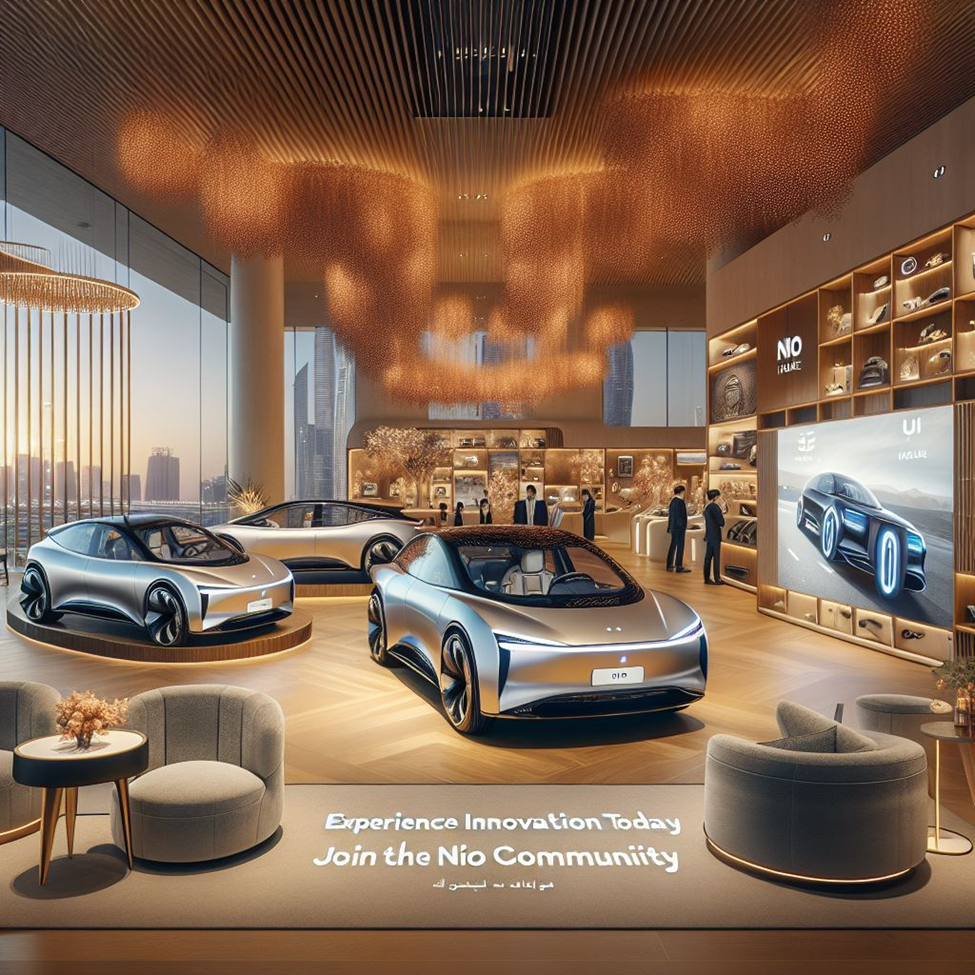
Fig. 3 Generated Image
The Instagram campaign for NIO House Abu Dhabi was intended to be a carousel post to effectively utilize elements of SIT and include a compelling call to action. However, the final output was a single image rather than the requested carousel post. This limited the opportunity to explore different aspects of the campaign, such as addressing common EV adoption barriers and showcasing multiple features of NIO House. While there is a call-to-action present, it doesn’t fully resonate with what the target consumer, Sophia, might be looking for. The call to action seems generic and doesn’t create a strong incentive for the viewer to act immediately. There is no mention of specific events or dates, which are crucial for creating urgency and fostering curiosity among potential visitors.
Moreover, the post appears AI-generated, which could detract from its authenticity and potentially reduce consumer trust. The image successfully depicts a group of people engaging with the brand, utilizing the ‘number of sources’ component of SIT to provide social proof. But it lacks the presence of influential figures such as celebrities or recognized influencers, which could have added credibility and strength to the message. There is an attempt to use immediacy with the existing call to action; however, without specific time-bound prompts or event details, the immediacy is not as effective as it could be.
The aesthetics within the image does convey a sense of luxury and community, aligning well with Sophia’s preferences for exclusivity and high-end experiences. Overall, while the image captures the luxurious essence of NIO House and could appeal to the target persona on an emotional level, the lack of a carousel format, specific calls to action with immediacy, and the presence of influential figures diminish its potential impact.
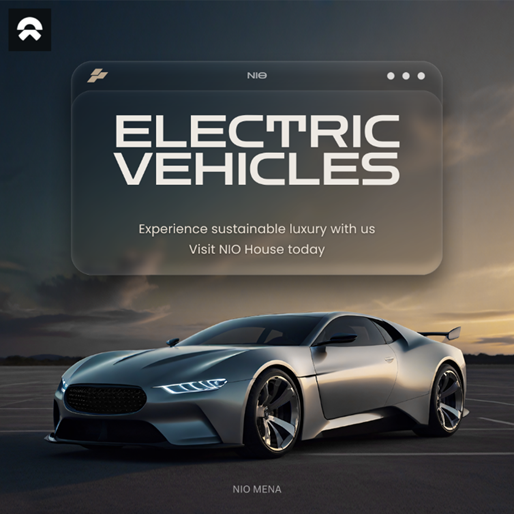
Improved Post:


References
- Aimé, I., Berger-Remy, F. and Laporte, M.E. (2022). ‘The brand, the persona, and the algorithm: how datafication is reconfiguring marketing work’. Journal of Business Research, 145, pp.814-827.
- Axsen, J., Cairns, J., Dusyk, N. and Goldberg, S. (2018). ‘What drives the Pioneers? Applying lifestyle theory to early electric vehicle buyers in Canada’. Energy Research & Social Science, 44, pp.17-30.
- Andreu, L., Casado-Díaz, A.B. and Mattila, A.S. (2015). ‘Effects of message appeal and service type in CSR communication strategies’. Journal of Business Research, 68(7), pp.1488-1495.
- Amatulli, C., De Angelis, M. and Donato, C. (2020). ‘An investigation on the effectiveness of hedonic versus utilitarian message appeals in luxury product communication’. Psychology & Marketing, 37(4), pp.523-534.
- Adhikari, M., Ghimire, L.P., Kim, Y., Aryal, P. and Khadka, S.B. (2020). ‘Identification and analysis of barriers against electric vehicle use’. Sustainability, 12(12), p.4850.
- Bui, M., Krishen, A.S., Anlamlier, E. and Berezan, O. (2022) ‘Fear of missing out in the digital age: The role of social media satisfaction and advertising engagement’, Psychology & marketing, 39(4), pp. 683–693. Available at: https://doi.org/10.1002/mar.21611.
- Castillo-Villar, F.R. and Villasante-Arellano, A.J. (2020). ‘Applying the multisensory sculpture technique to explore the role of brand usage on multisensory brand experiences’. Journal of Retailing and Consumer Services, 57, p.102185.
- Good, M.C. and Hyman, M.R. (2020). ‘Fear of missing out: antecedents and influence on purchase likelihood’. Journal of Marketing Theory and Practice, 28(3), pp.330-341.
- GMI (2024). ‘UAE SOCIAL MEDIA STATISTICS 2024’. Available at: https://www.globalmediainsight.com/blog/uae-social-media-statistics/ (Accessed: 5 March 2025).
- Grewal, D., Levy, M. and Kumar, V. (2009). ‘Customer experience management in retailing: An organizing framework’. Journal of retailing, 85(1), pp.1-14.
- Gruber, B. (2021). Buying an EV isn’t just a purchase, it’s a lifestyle choice. TNW. 21 May. Available at: https://thenextweb.com/news/buying-ev-isnt-purchase-lifestyle-choice-syndication (Accessed: 2 March 2025).
- Hsu, P.F., Lu, Y.H., Chen, S.C. and Kuo, P.P.Y. (2024). ‘Creating and validating predictive personas for target marketing’. International Journal of Human-Computer Studies, 181, p.103147.
- Hirose, A. and Christison, C. (2024) ’32 Instagram features marketers need to know in 2024′, Hootsuite Blog, 27 September. Available at: https://blog.hootsuite.com/instagram-features/ (Accessed: 5 March 2025).
- Hultén, B. (2011). ‘Sensory marketing: the multi‐sensory brand‐experience concept’. European business review, 23(3), pp.256-273.
- Herskovitz, S. and Crystal, M. (2010). ‘The essential brand persona: storytelling and branding’. Journal of business strategy, 31(3), pp.21-28.
- Jansen, B.J., Salminen, J.O. and Jung, S.G. (2020). ‘Data-driven personas for enhanced user understanding: Combining empathy with rationality for better insights to analytics’. Data and Information Management, 4(1), pp.1-17.
- Kusumasondjaja, S. (2018). ‘The roles of message appeals and orientation on social media brand communication effectiveness: An evidence from Indonesia’. Asia Pacific Journal of Marketing and Logistics, 30(4), pp.1135-1158.
- Krishna, G. (2021). ‘Understanding and identifying barriers to electric vehicle adoption through thematic analysis’. Transportation Research Interdisciplinary Perspectives, 10, p.100364.
- Kaushik, S. and Gokhale, N. (2022). ‘Online Sensory Marketing: Developing Five-Dimensional Multi-Sensory Brand Experiences and its Effectiveness’. Cardiometry, (24), pp.567-576.
- Latane, B. (1981) ‘The psychology of social impact’, The American psychologist, 36(4), pp. 343–356. Available at: https://doi.org/10.1037/0003-066X.36.4.343.
- Latané, B. (1996). ‘Dynamic social impact: The creation of culture by communication’. Journal of communication, 46(4), pp.13-25.
- Maital, S. (1999) ‘The Experience Economy: Work Is Theatre & Every Business a Stage’, MIT Sloan management review. Cambridge: Massachusetts Institute of Technology, Cambridge, MA, p. 93.
- Microsoft Co-pilot (2025). Co-pilot response to Ishita Jagasia, 7 March.
- Mikhlina, A. and Saukkonen, J. (2024). ‘Using Personas in Human Capital Management: A Novel Concept Affected by Legal, Ethical and Technological Considerations’. Electronic Journal of Knowledge Management, 22(2), pp.50-62.
- McGrath, R. (2024) ‘The Future of Social Media – UK – 2024’. Mintel. Available at: https://clients-mintel-com.hwu-ezproxy.idm.oclc.org/report/the-future-of-social-media-uk-2024?fromSearch=%3Ffreetext%3Dsocial%2520media%2520platforms%2520to%2520purchase%26resultPosition%3D1 (Accessed: 5 March 2025).
- NIO (2025). NIO POWER. Available at: https://www.nio.com/nio-power (Accessed: 2 March 2025).
- Oniga, A. (2025) C10DM Recorded Conversation. 25 January. Available at: https://heriotwatt-my.sharepoint.com/personal/ao3007_hw_ac_uk/_layouts/15/stream.aspx?id=%2Fpersonal%2Fao3007%5Fhw%5Fac%5Fuk%2FDocuments%2FC10DM%20Recorded%20Conversation%2Emp4&ga=1&referrer=StreamWebApp%2EWeb&referrerScenario=AddressBarCopied%2Eview%2Eb9cc2c2d%2De905%2D481f%2D86d1%2D935ba8e70899 (Accessed: 5 March 2025).
- Pamidimukkala, A., Kermanshachi, S., Rosenberger, J.M. and Hladik, G. (2024). ‘Barriers and motivators to the adoption of electric vehicles: A global review’. Green Energy and Intelligent Transportation, 3(2), p.100153.
- Panda, T.K. and Mishra, K. (2013). ‘Does Emotional Appeal Work in Advertising? The Rationality Behind Using Emotional Appeal to Create Favorable Brand Attitude’. IUP Journal of Brand Management, 10(2).
- Perez-Vega, R. (2016) Social impact theory: an examination of how immediacy operates as an influence upon social media interaction in Facebook fan pages. The Marketing Review. 16 (3), 299–321. doi: https://doi.org/10.1362/146934716X14636478977791.
- Phan, M., Thomas, R., & Heine, K. (2011). ‘Social media and luxury brand management: The case of Burberry’. Journal of Global Fashion Marketing, 2(4), 213–222.
- Reich, B.J. and Pittman, M. (2020). ‘An appeal to intimacy: Consumer response to platform‐appeal fit on social media’. Journal of Consumer Psychology, 30(4), pp.660-670.
- Shahid, S., Paul, J., Gilal, F.G. and Ansari, S., (2022). ‘The role of sensory marketing and brand experience in building emotional attachment and brand loyalty in luxury retail stores’. Psychology & Marketing, 39(7), pp.1398-1412.
- Shergill, N. (2025) ‘Social Media: Content Creators – UK – 2025’. Mintel. Available at: https://clients-mintel-com.hwu-ezproxy.idm.oclc.org/report/social-media-content-creators-uk-2025?fromSearch=%3Ffreetext%3Duse%2520of%2520social%2520media%26resultPosition%3D1 (Accessed: 5 March 2025)
- Suryani, T., Fauzi, A.A. and Nurhadi, M. (2022). ‘What should companies do to improve brand awareness through Instagram? The lens of signalling theory’. Asian Journal of Business and Accounting, pp.247-279.
- Shales, D. (2024). Consumers making sustainable choices willing to buy cars online. EV Life. 20 October. Available at: https://evlife.world/en/ae/news/consumers-making-sustainable-choices-willing-to-buy-cars-online/ (Accessed: 2 March 2025).
- Salminen, J., Jansen, B.J., An, J., Kwak, H. and Jung, S.G. (2018). ‘Are personas done? Evaluating their usefulness in the age of digital analytics’. Persona Studies, 4(2), pp.47-65.
- Thomas, S. (2025). Luxury EVs power the UAE’s green shift. Gulf News. 27 February. Available at: https://gulfnews.com/auto/luxury-evs-power-the-uae-s-green-shift-1.500046276 (Accessed: 2 March 2025).
- Tarei, P.K., Chand, P. and Gupta, H. (2021). ‘Barriers to the adoption of electric vehicles: Evidence from India’. Journal of Cleaner Production, 291, p.125847.
- Uddin, S.F., Sabir, L.B., Kirmani, M.D., Kautish, P., Roubaud, D. and Grebinevych, O. (2024). ‘Driving change: Understanding consumers’ reasons influencing electric vehicle adoption from the lens of behavioural reasoning theory’. Journal of Environmental Management, 369, p.122277.
- von Wallpach, S., Hemetsberger, A., Thomsen, T.U. and Belk, R.W. (2020). ‘Moments of luxury–A qualitative account of the experiential essence of luxury’. Journal of Business Research, 116, pp.491-502.
- Van Doorn, J., Lemon, K. N., Mittal, V., Nass, S., Pick, D., Pirner, P., & Verhoef, P. C. (2010). Customer engagement behaviour: theoretical foundations and research directions. Journal of Service Research, 13(3), 253-266.
- Vafainia, S., Breugelmans, E. and Bijmolt, T., 2019. Calling customers to take action: the impact of incentive and customer characteristics on direct mailing effectiveness. Journal of Interactive Marketing, 45(1), pp.62-80.
- Wu, P.C. and Wang, Y.C. (2011). ‘The influences of electronic word‐of‐mouth message appeal and message source credibility on brand attitude’. Asia Pacific Journal of Marketing and Logistics, 23(4), pp.448-472.
- Wiedmann, K.P., Labenz, F., Haase, J. and Hennigs, N. (2018). ‘The power of experiential marketing: exploring the causal relationships among multisensory marketing, brand experience, customer perceived value and brand strength’. Journal of Brand Management, 25, pp.101-118.
- Xu, W., Jung, H. and Han, J. (2022). ‘The influences of experiential marketing factors on brand trust, brand attachment, and behavioral intention: Focused on integrated resort tourists’. Sustainability, 14(20), p.13000.